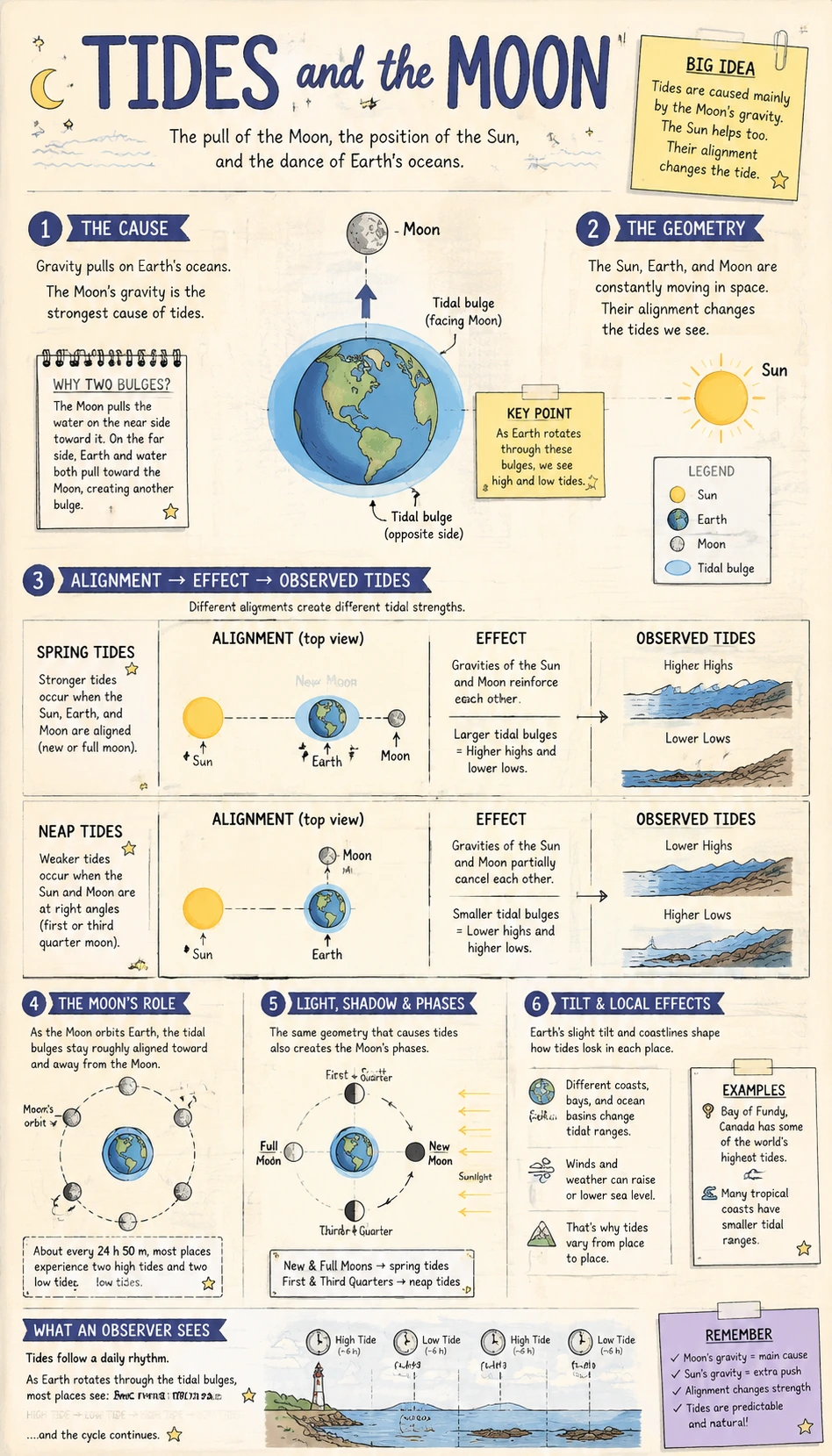
About this astronomy infographic
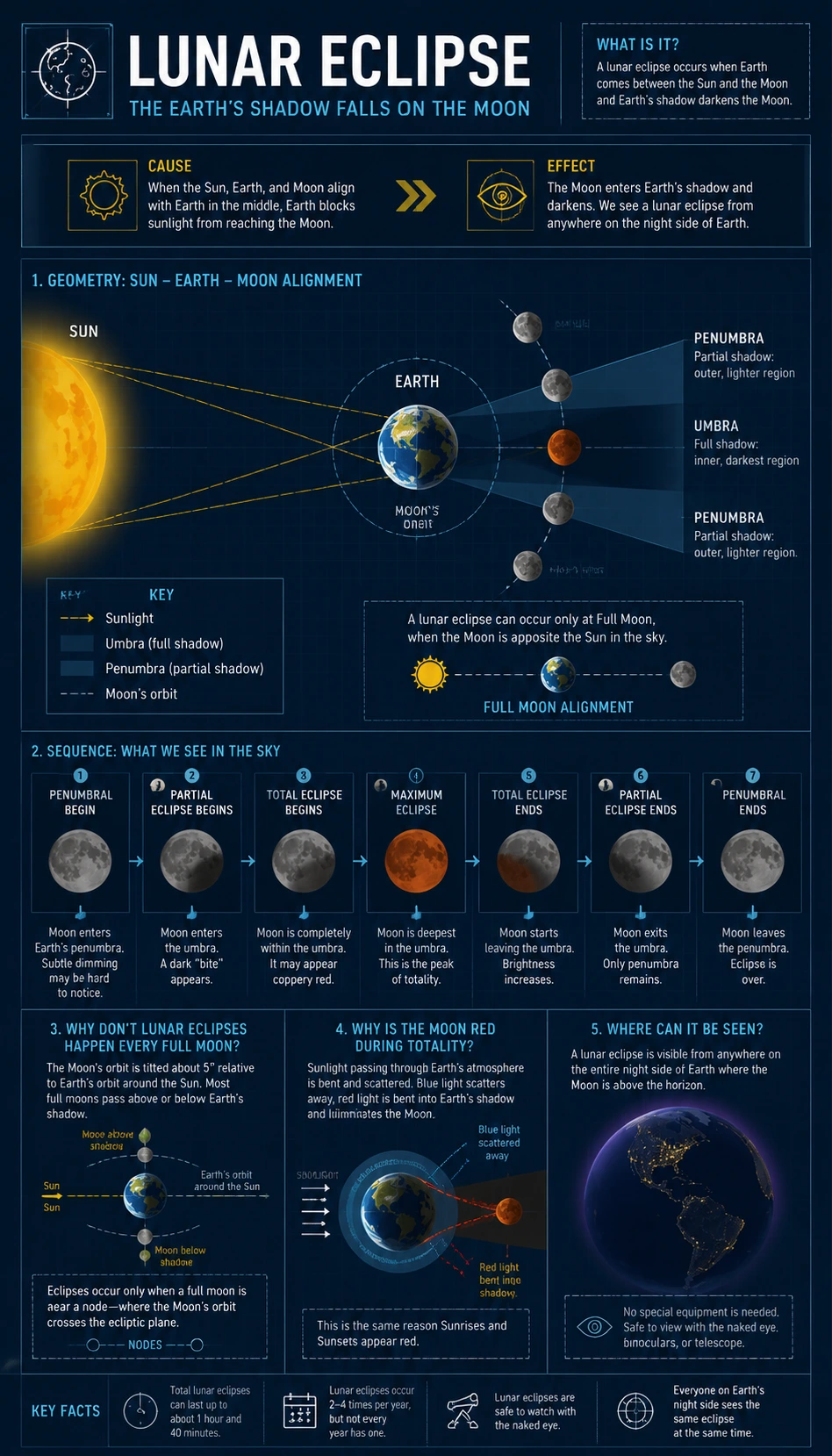
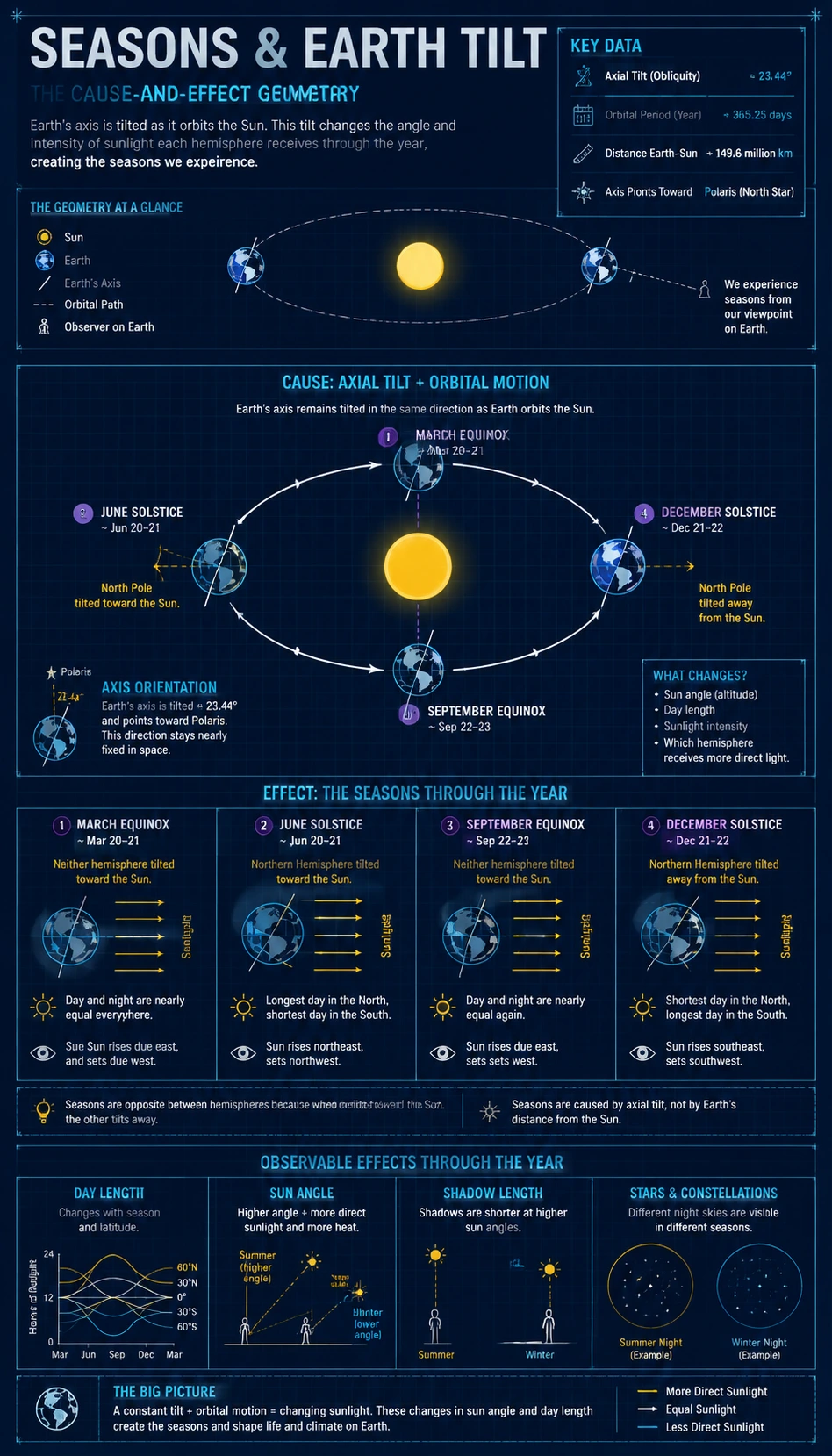
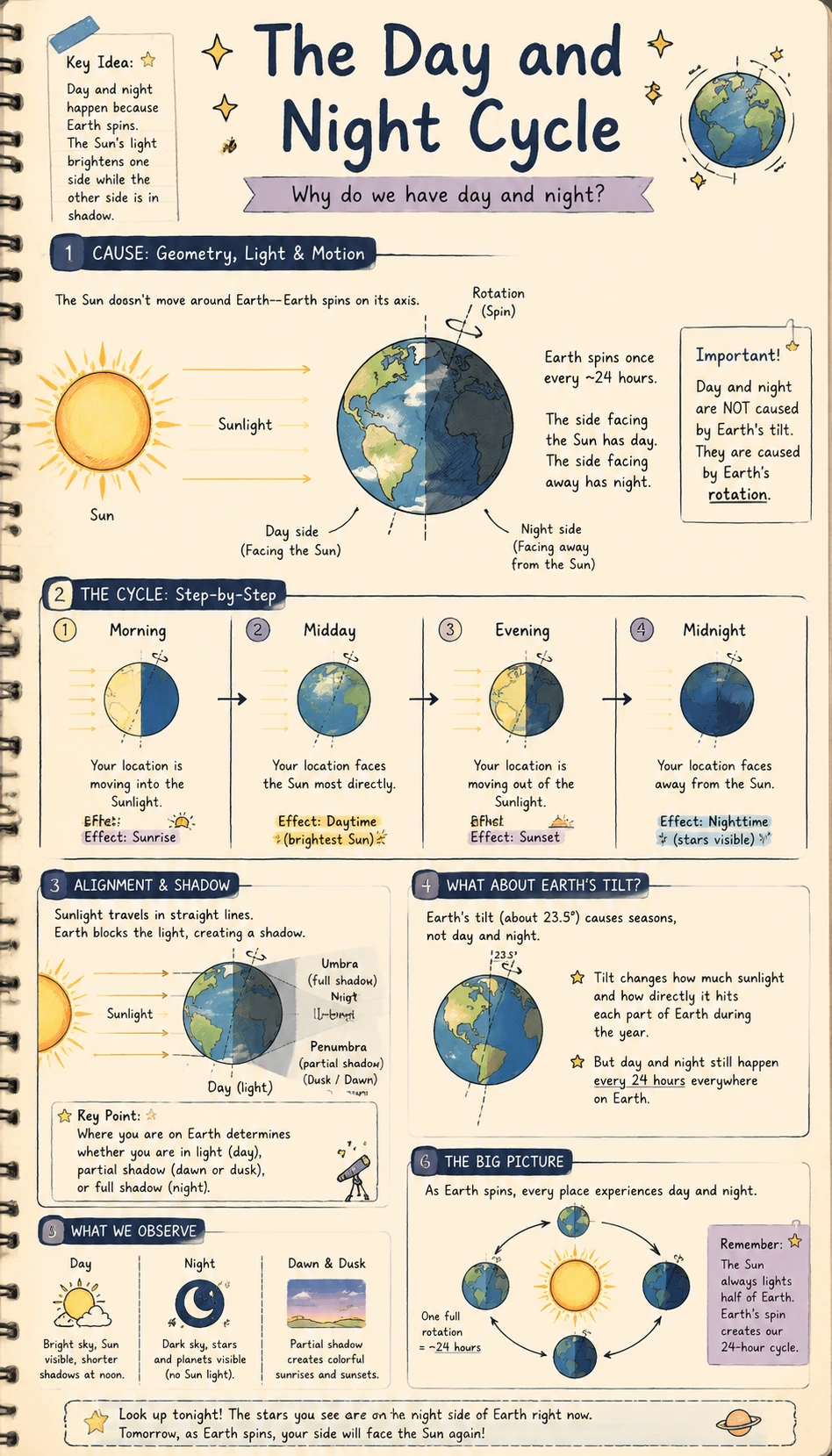
This Tides and the Moon Infographic explains tides and the moon through the geometry of light, shadow, motion, and viewpoint. Instead of treating the topic as a list of facts, the infographic can show relationships between celestial bodies and the visible effect an observer notices from Earth. It is useful for lessons, study guides, and science explainers that need clear sequencing, readable labels, and cause-and-effect structure. Built as an Astronomy Infographic Generator example, it keeps the astronomy concept visual, accurate, and easy to discuss.
Image prompt
Create an astronomy knowledge infographic about Tides and the Moon. Use a cause-and-effect astronomy explanation structure, not a generic fact sheet. Explain Tides and the Moon through orbital geometry, alignment, light, shadow, tilt, and observable sky effects in a clear astronomy learning format. Knowledge points: Explain the geometry between the Sun, Earth, Moon, and observer; Show the visible effect or cycle step-by-step with clear arrows and labels; Separate cause, alignment, shadow, tilt, or orbital motion from the observed result; Avoid astrology and keep the explanation scientific and classroom-friendly. Image description: A cause-and-effect astronomy diagram explaining tides and the moon with clear relationships among light, shadow, motion, tilt, or observer viewpoint. Visible page description to align with: This Tides and the Moon Infographic explains tides and the moon through the geometry of light, shadow, motion, and viewpoint. Instead of treating the topic as a list of facts, the infographic can show relationships between celestial bodies and the visible effect an observer notices from Earth. It is useful for lessons, study guides, and science explainers that need clear sequencing, readable labels, and cause-and-effect structure. Built as an Astronomy Infographic Generator example, it keeps the astronomy concept visual, accurate, and easy to discuss. Use accurate English labels, clear section hierarchy, readable explanatory text, and astronomy diagrams or visuals that match the topic. Do not include astrology, mystical interpretation, unsupported exact values, invented discoveries, or unsupported life/habitability claims.