About this insurance infographic
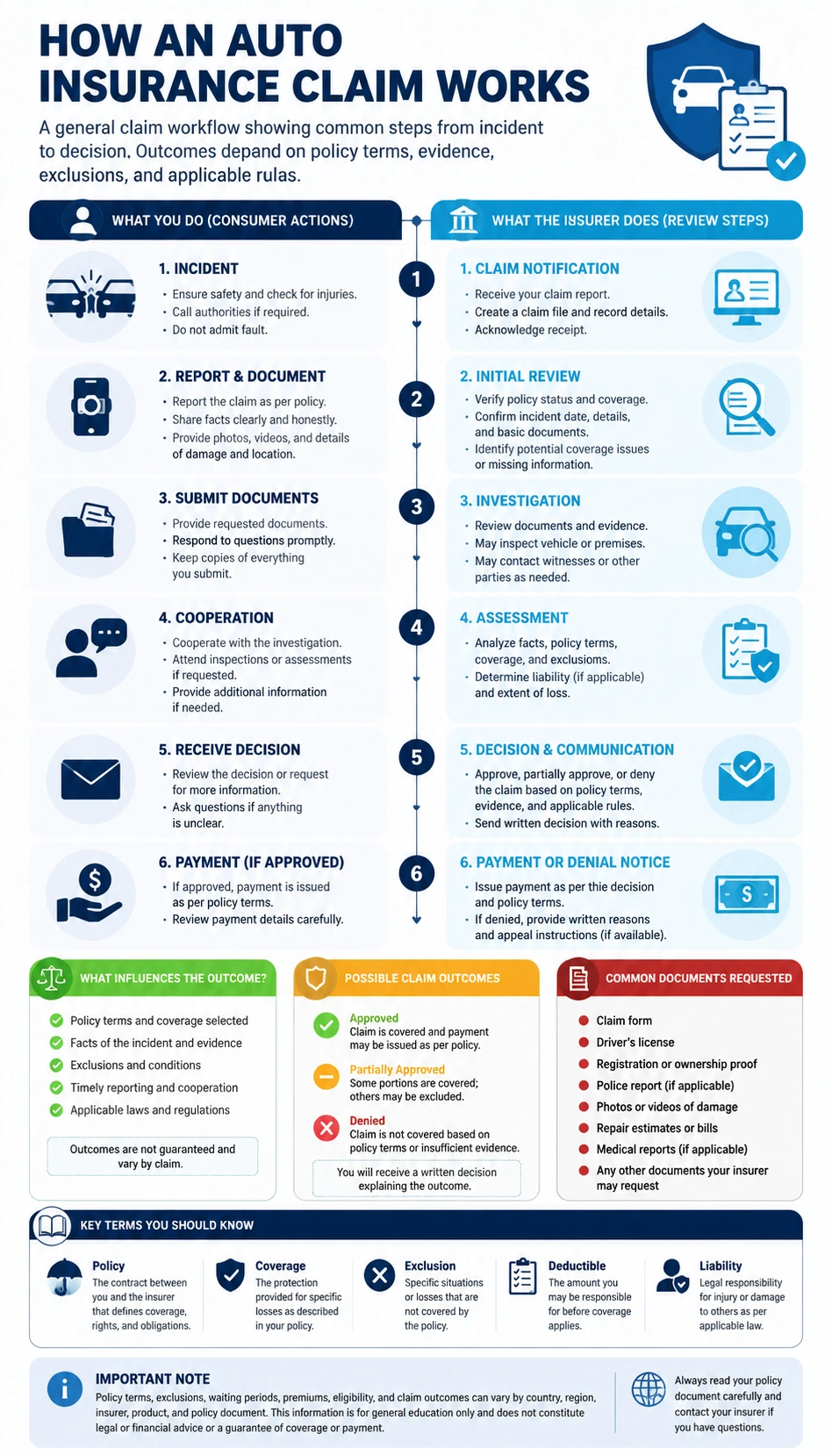
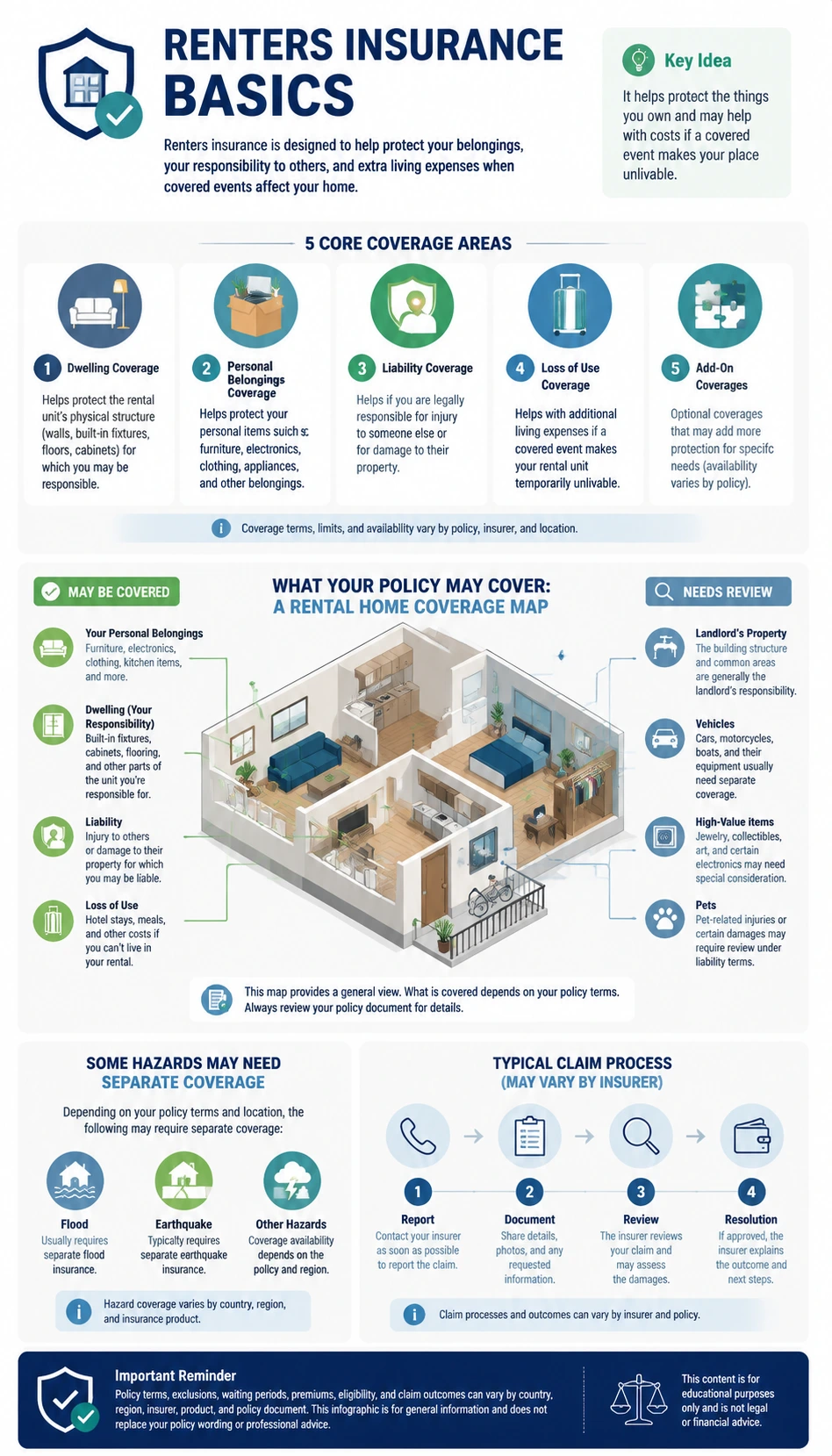
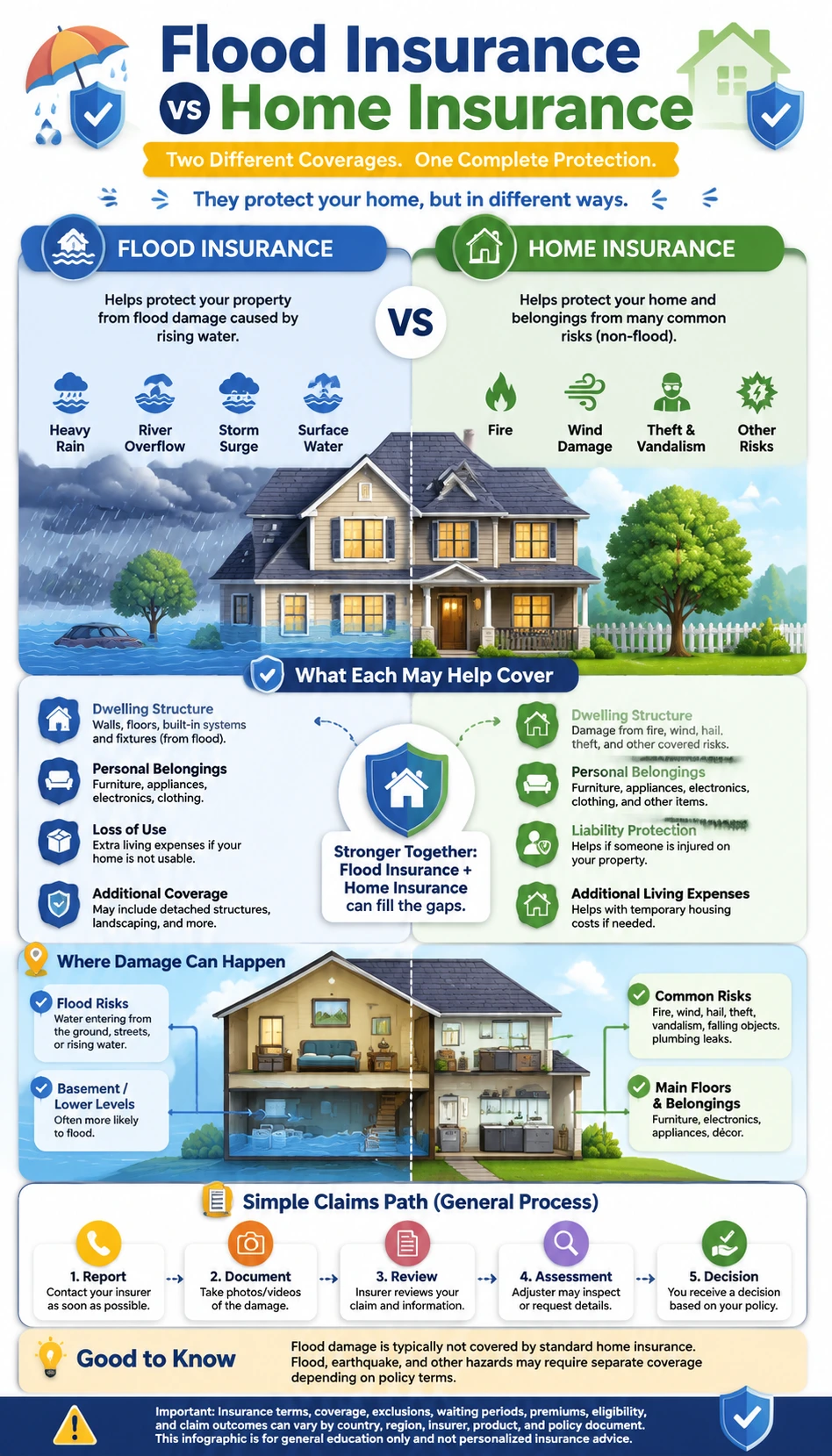
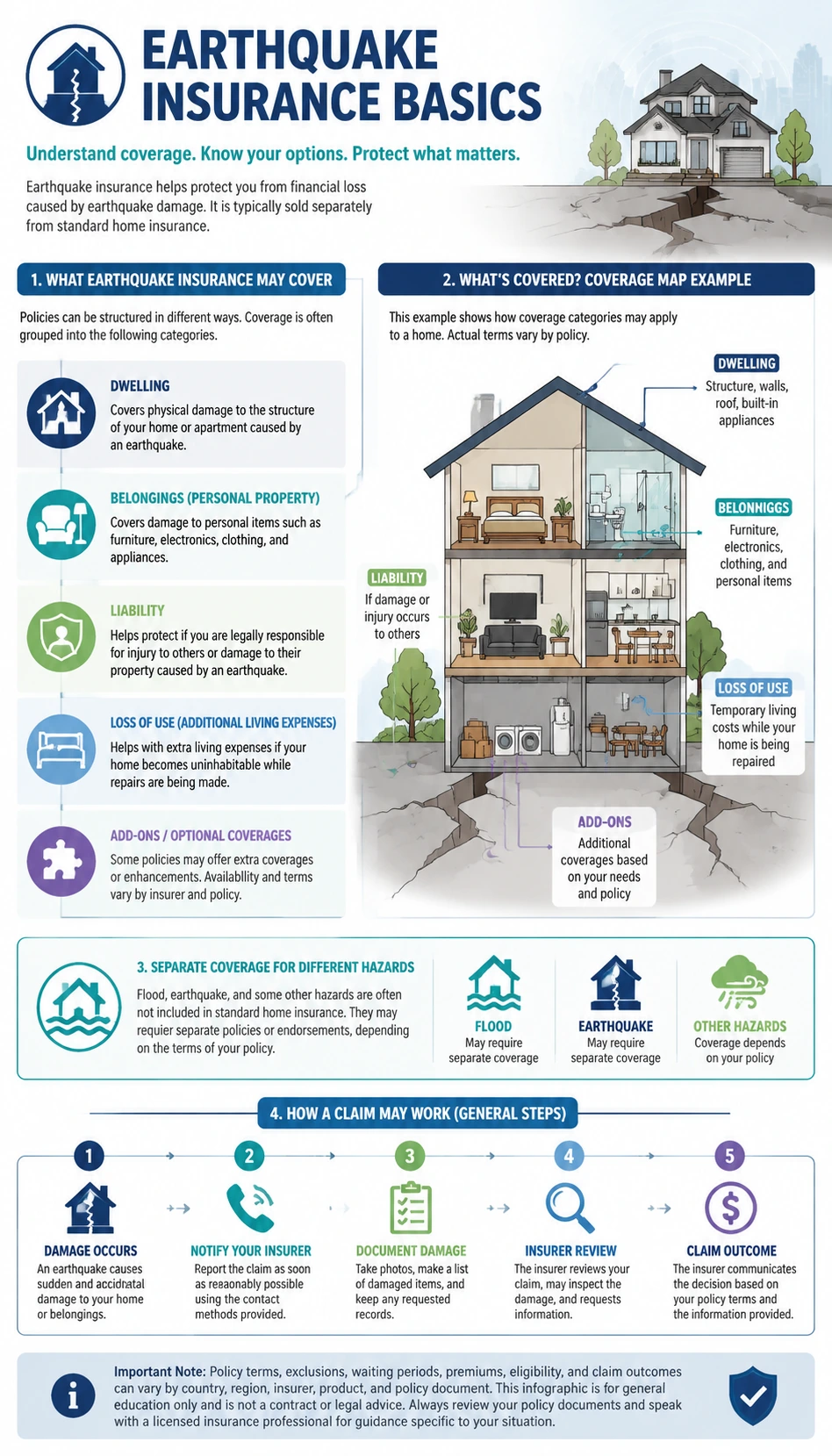
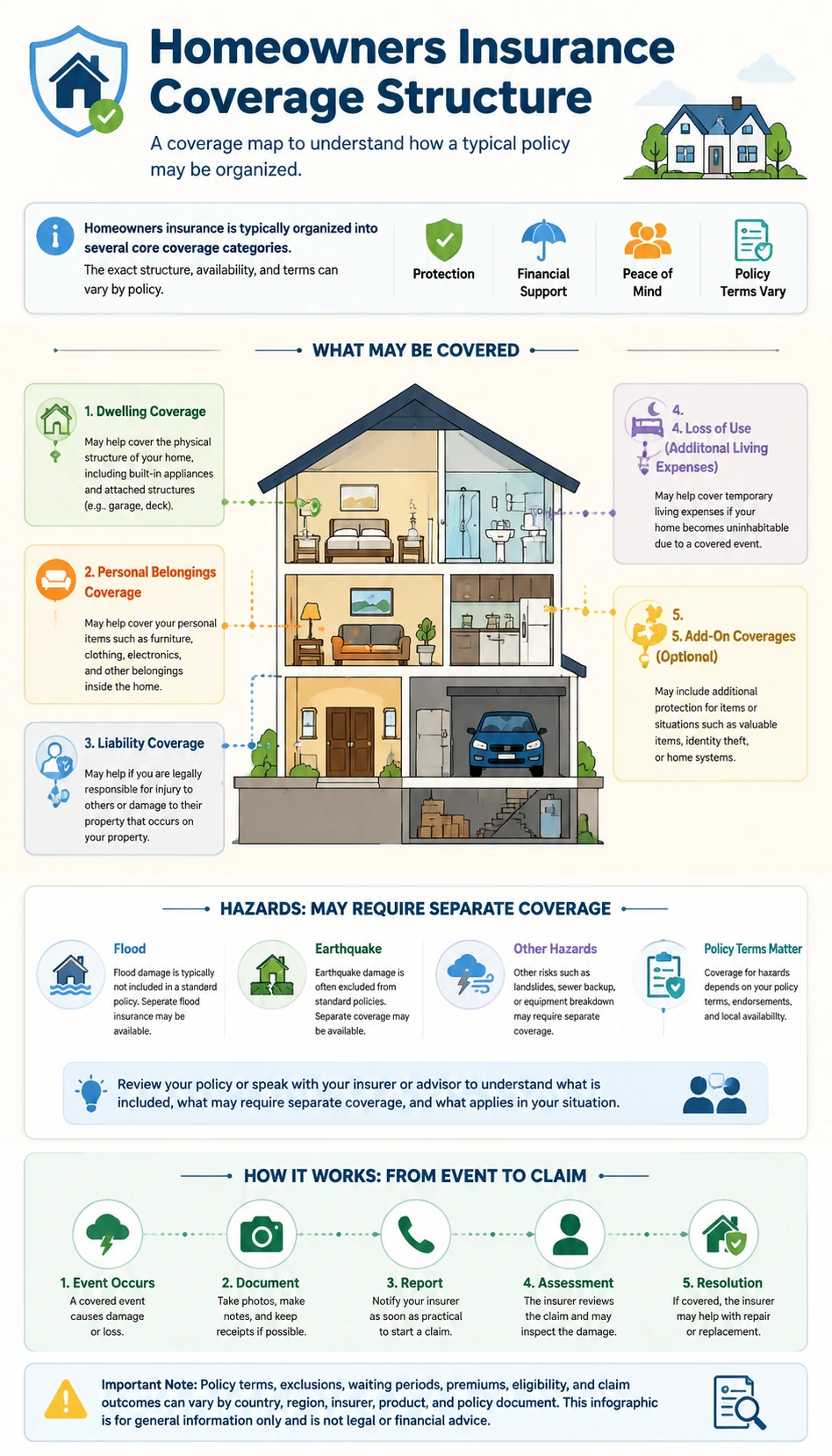
This Homeowners Insurance Coverage Structure Infographic helps readers understand coverage structure, claim steps, property risks, travel scenarios, or everyday insurance vocabulary through a clear visual layout. The infographic is built for general insurance education, so it explains concepts and terms without recommending a specific insurer, product, coverage amount, or personal decision. It can help consumers, families, founders, educators, and content teams see how the topic fits into policy documents, claims, coverage layers, or risk transfer. As an Insurance Infographic Generator example, it keeps the wording neutral and reminds readers that insurance terms vary by country, region, company, and policy.
Image prompt
Create an insurance knowledge infographic about Homeowners Insurance Coverage Structure. Use a coverage map structure with a clear title, readable English labels, practical section headings, and organized explanatory text. Explain Homeowners Insurance Coverage Structure as a neutral insurance knowledge infographic using a coverage map structure. Focus on general insurance education, policy vocabulary, coverage logic, and practical concept clarity without recommending products, companies, limits, or personal decisions. Knowledge points: Show how property coverage can be divided into dwelling, belongings, liability, loss of use, or add-on categories; Explain that flood, earthquake, and other hazards may require separate coverage depending on policy terms; Use a house or apartment coverage map to separate what may be covered from what needs review; Avoid presenting exclusions, deductibles, or hazard rules as universal facts. Image description: This homeowners insurance coverage structure infographic explains insurance concepts in a clear visual format for consumers, families, founders, educators, and content creators. Visible page description to align with: This Homeowners Insurance Coverage Structure Infographic helps readers understand coverage structure, claim steps, property risks, travel scenarios, or everyday insurance vocabulary through a clear visual layout. The infographic is built for general insurance education, so it explains concepts and terms without recommending a specific insurer, product, coverage amount, or personal decision. It can help consumers, families, founders, educators, and content teams see how the topic fits into policy documents, claims, coverage layers, or risk transfer. As an Insurance Infographic Generator example, it keeps the wording neutral and reminds readers that insurance terms vary by country, region, company, and policy. Include a clear note that policy terms, exclusions, waiting periods, premiums, eligibility, and claim outcomes can vary by country, region, insurer, product, and policy document. Do not provide personalized insurance advice, specific product recommendations, specific coverage amounts, real-time quotes, legal guarantees, payout promises, or invented policy rules.