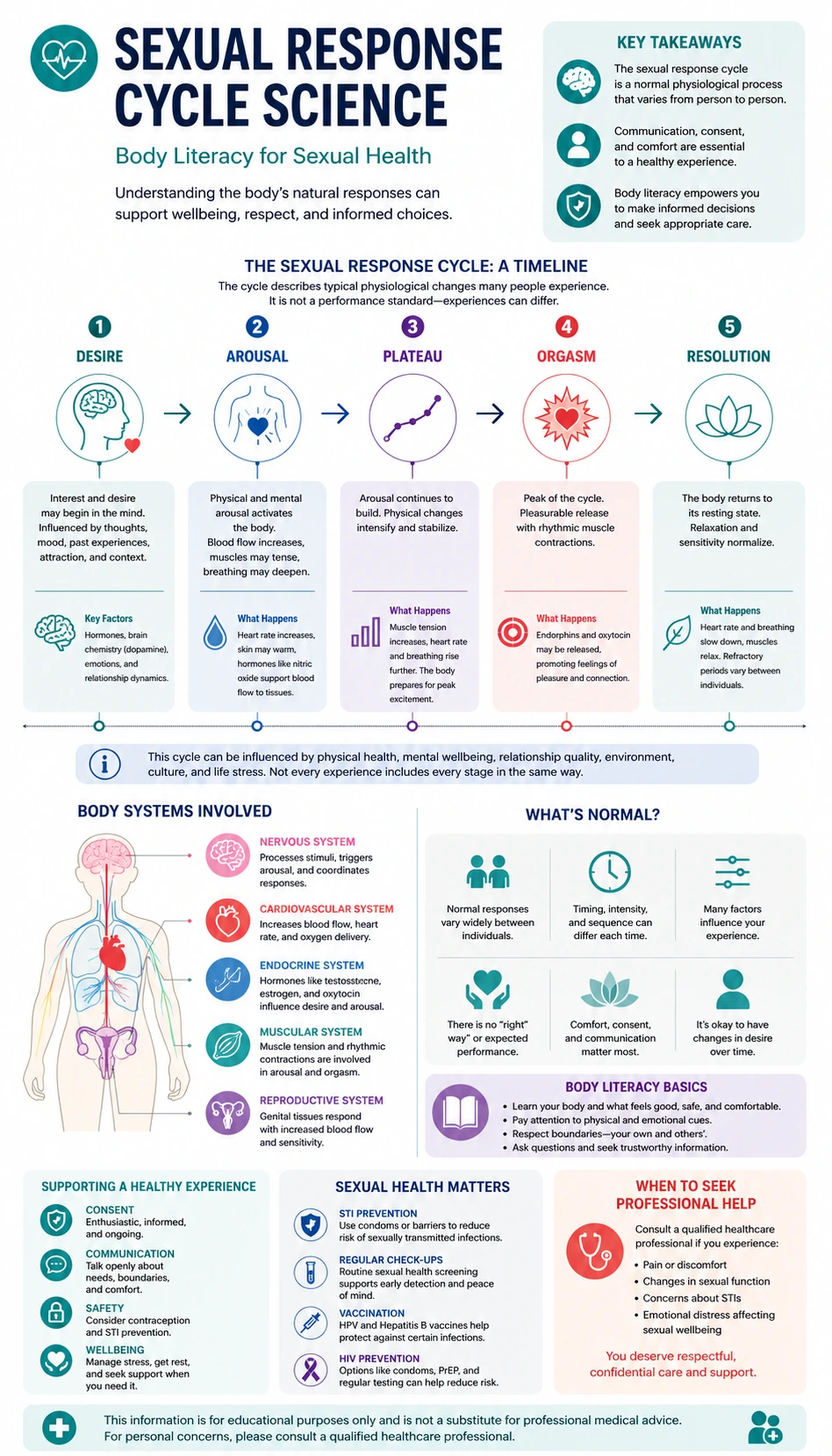
About this sex education infographic
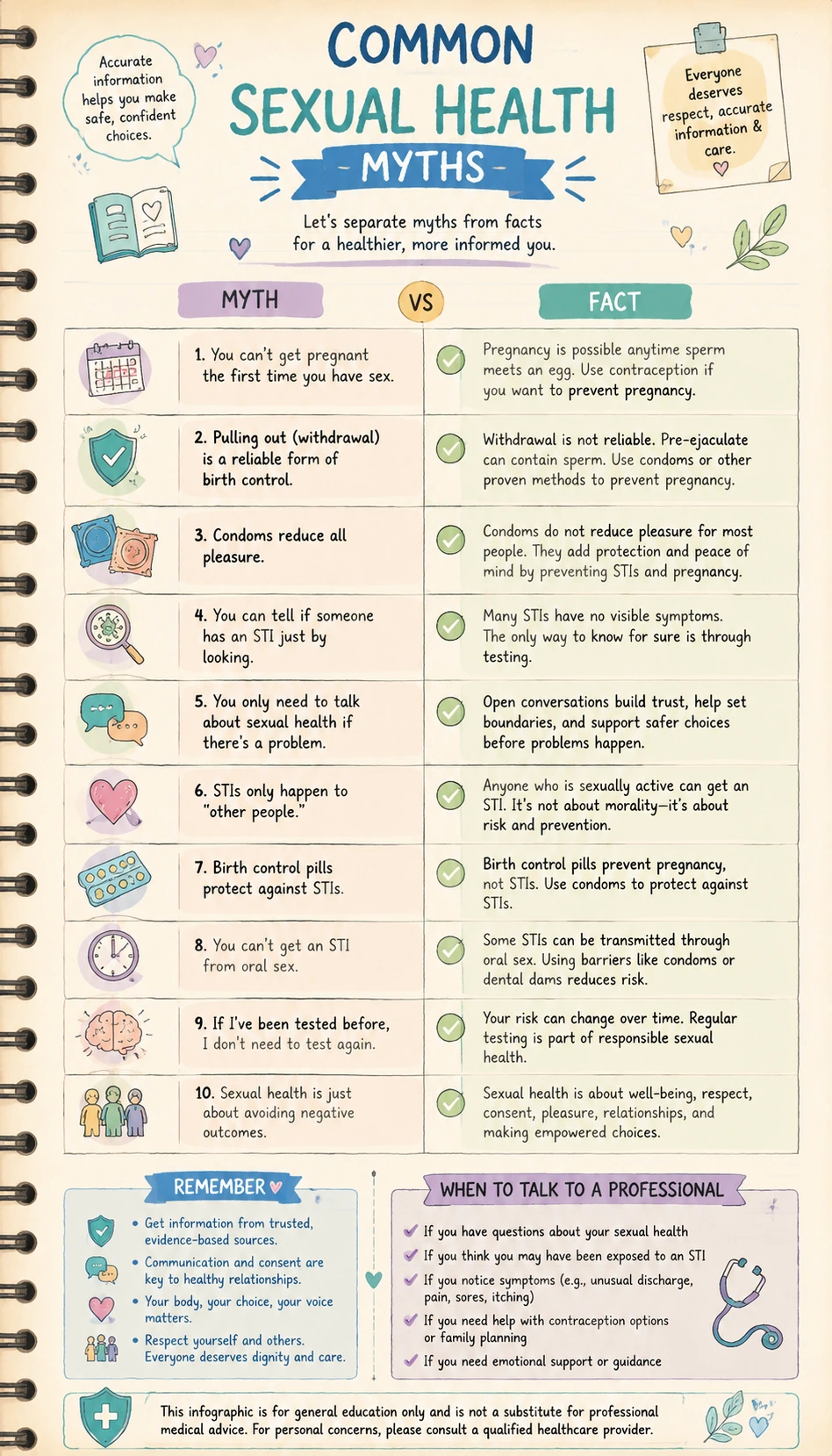
This Common Sexual Health Myths Infographic helps correct common sexual health misconceptions with a respectful myth-vs-fact structure. The infographic can organize careful explanations, uncertainty, consultation reminders, and public health context into a clear visual guide. It is useful for educators, content creators, and communication teams that need non-shaming sexual health education material. As a Sex Education Infographic Generator example, it avoids sensational claims, explicit imagery, and individual medical advice while helping readers understand the topic through structured visual learning.
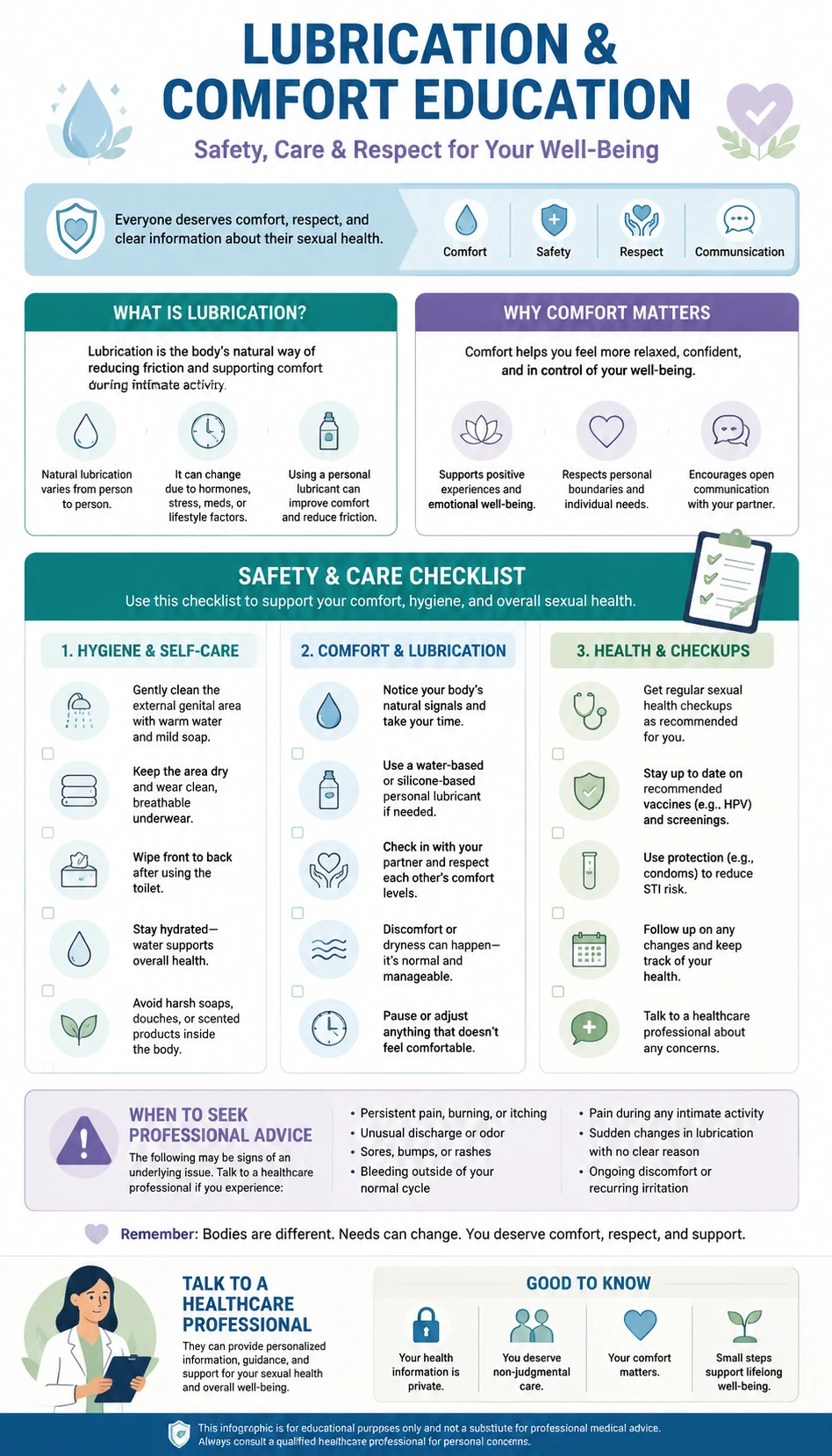
Image prompt
Create a sex education infographic about Common Sexual Health Myths for public health and sexual health education. Use a myth vs fact structure. Explain Common Sexual Health Myths as a myth-aware sexual health education myth vs fact that uses neutral, non-explicit, medically responsible public health language. Knowledge points: Identify common myths and replace them with careful public health education wording; Clarify what the infographic can explain versus what requires professional medical advice; Use neutral visual sections that avoid sensational, sexualized, or fear-based framing; Keep the tone respectful, inclusive, non-shaming, and scientifically responsible. Image description: A myth-aware sexual health education infographic explaining common sexual health myths with careful public health wording, neutral visuals, and readable sections. Visible page description to align with: This Common Sexual Health Myths Infographic helps correct common sexual health misconceptions with a respectful myth-vs-fact structure. The infographic can organize careful explanations, uncertainty, consultation reminders, and public health context into a clear visual guide. It is useful for educators, content creators, and communication teams that need non-shaming sexual health education material. As a Sex Education Infographic Generator example, it avoids sensational claims, explicit imagery, and individual medical advice while helping readers understand the topic through structured visual learning. Use neutral icons, abstract diagrams, calm health education visuals, readable English labels, and organized sections. No nudity, no explicit anatomy close-ups, no sexual acts, no erotic imagery, no minors, no dating or school scenario, no sexual technique instruction, no stimulation or performance advice, no diagnosis, no treatment plan, no medication dosage, and no stigmatizing language.